*Please note that the following .
Daniel Diermeier and Richard Florida
Guest Columnists
The age of technology is rapidly transforming economies. But the research university, the place where so many of these life-changing technologies have had their origin, has largely stayed the same. For hundreds of years, great universities have been defined by a single campus 鈥� self-contained, insulated and anchored in one place.
For more than half a century after Vannevar Bush鈥檚 鈥淪cience: The Endless Frontier,鈥� universities served as the anchor for regional economies. MIT spawned the technology corridor along Route 128. Stanford seeded Silicon Valley. Carnegie Mellon helped reinvent Pittsburgh. The University of Texas anchored Austin鈥檚 transformation into a tech hub. Research universities became the foundation of regional development, turning breakthroughs into companies and graduate students into entrepreneurs.

And the impact went both ways. Stanford benefitted from cross-pollination with聽Silicon Valley. USC鈥檚 School of Cinematic Arts was聽informed by its proximity to Hollywood. Universities and their local ecosystems created a positive feedback loop attracting talent and creating opportunities. Place mattered.
It still does.
The geography of innovation is changing
But a new geography of innovation is emerging. Breakthroughs, talent and economic growth are increasingly concentrated in a small group of superstar cities: New York and London for finance, the San Francisco Bay Area for technology, Singapore for trade. Emerging hubs like Miami, Austin, and West Palm Beach are also developing their own distinct strengths.
An imperative of being a great university in the 21st century is to be part of innovation economies wherever they are, because such places are increasingly shaping career pathways, research agendas and entire industries.
Why universities need a locational portfolio
Universities now need what businesses have long understood to be essential 鈥� a locational portfolio strategy. That means maintaining a strong home base while establishing strategic presence in the innovation centers where students will compete and research will have the greatest impact.
This strategy is not about enrollment growth or revenue generation. And the goal is not to 鈥渇ranchise鈥� 鈥� to simply replicate in new locations what worked well at home. Rather, the idea is to create thoughtful investments that catalyze new models of research and education that combine a university鈥檚 strengths with uniquely local assets.
Any 鈥淣ew Wall Street鈥� needs a great business school, but a business school benefits from being located in a financial center. A hub for space technology needs a local pipeline of excellent engineers, while engineering schools thrive when research collaboration, funding and career opportunities can be found close by.
Beyond the single-campus model
Founding a research university from scratch requires clearing enormous hurdles, regulatory and otherwise, which is why we see so little disruptive innovation in higher education. It is most practical for new campuses to come from incumbents. When an existing university creates a campus in a new location, it offers the best of both worlds: the freedom to experiment with new approaches, backed by a strong home base.

The home base provides much that is essential: a source of identity, reputation and history; a rallying point for alumni; robust research infrastructure and the accreditation necessary for a university to operate anywhere. But universities can no longer carry out their missions at the highest level with a home base alone. They must also be where the most important breakthroughs are happening, and where the greatest opportunities for students and faculty lie.
91香蕉视频鈥檚 networked-campus approach

That perspective has guided 91香蕉视频鈥檚 decisions to establish presence in a small number of strategically important locations. In New York, students and faculty gain proximity to global finance, media and design through a campus in Manhattan鈥檚 Chelsea neighborhood. In San Francisco, we are establishing the Jen-Hsun and Lori Huang College of Art, Architecture and Design as the cornerstone of our new campus because no place better embodies the convergence of technology, creativity and entrepreneurship. There, we will create a new intellectual environment where art, architecture and design become engines of discovery and innovation.
In West Palm Beach, a booming hub for finance, defense and space technology, we鈥檙e developing a graduate campus where we鈥檒l reimagine business and engineering education for the age of technology. In Chattanooga, the public utility EPB operates the nation鈥檚 first facility providing commercial access to both a trapped-ion quantum computer and a photonics-based local quantum network.
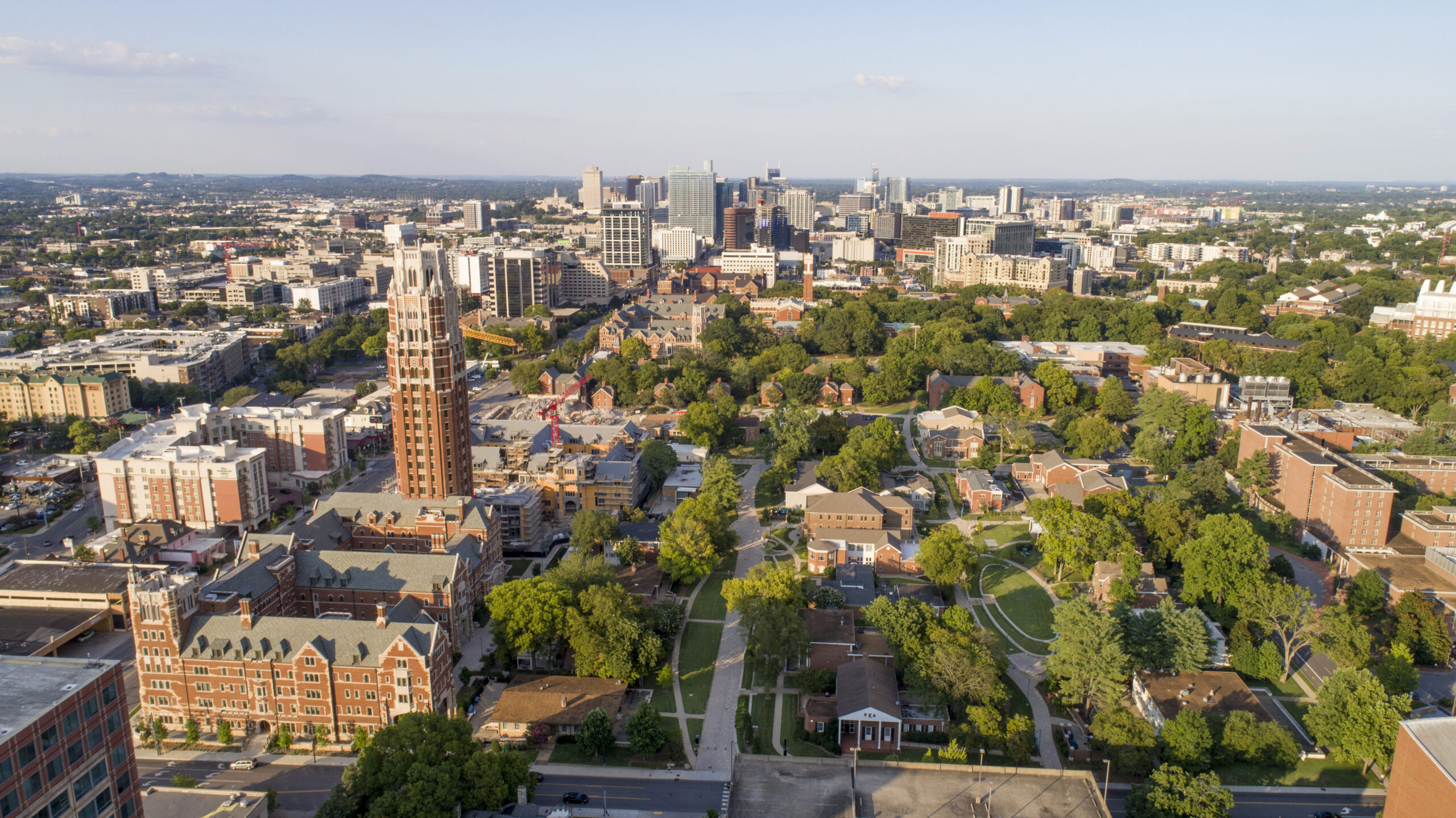
The quantum campus we鈥檙e developing with EPB will enable students and faculty to explore frontiers in quantum and such critical fields as energy, national security and health care.聽These new opportunities will complement Nashville鈥檚 existing strengths in defining the future of healthcare, mobility and, of course, music.
A hub-and-spoke university for the modern economy
The common thread among these new sites is that each location offers distinctive opportunities based on local innovation. Taken together, they form a connected network 鈥� Nashville as hub, with other cities as spokes 鈥� mirroring the structure of the modern economy itself. Just as companies have evolved from single headquarters to distributed operations, and cities from industrial cores to innovation corridors, universities must evolve from isolated campuses to connected systems.
The future belongs to connected universities
The traditional university was built for an era when geography was less determinative, and institutions could succeed largely within the boundaries of a single campus. The new connected university will be judged by how well it connects students and faculty to the places where ideas are tested, careers are formed and innovation takes root, while remaining grounded in institutional purpose and coherence.
It should also be measured by the benefits it provides to its host cities. A new campus must add to and amplify a community鈥檚 assets. One thing that hasn鈥檛 changed is that when there is alignment between a university and its community, magic can happen.
Universities face economic and political pressures not seen in our lifetime. The institutions that thrive in the coming decades will not be islands unto themselves. They will map their missions onto the shifting geography of growth that is reshaping how we live, work and learn.
Daniel Diermeier is chancellor of 91香蕉视频. Richard Florida is a visiting distinguished professor at 91香蕉视频 and author of “The Rise of the Creative Class” and “The New Urban Crisis.”